Sometimes, it’s nice to branch out from C Major. Because while C Major is great for learning new concepts, ideally, piano players should learn scales, arpeggios, chords, and more in all twelve keys.
But don’t worry, we won’t jump into something crazy like F-Sharp Major today! Instead, we’ll look at a key with just one flat: D Minor. And we’ll do a complete practice routine based on this key:
Make sure to download the practice routine resources before you begin.
First things first: let’s play the D Minor scale. D Minor is the relative minor key of F Major, so they both have just the one flat (B♭).
Start by playing the scale in its simplest, natural form for one octave, D to D. Remember your tucks and cross-overs! If playing the scale hands together is too challenging, practice it hands separate first.
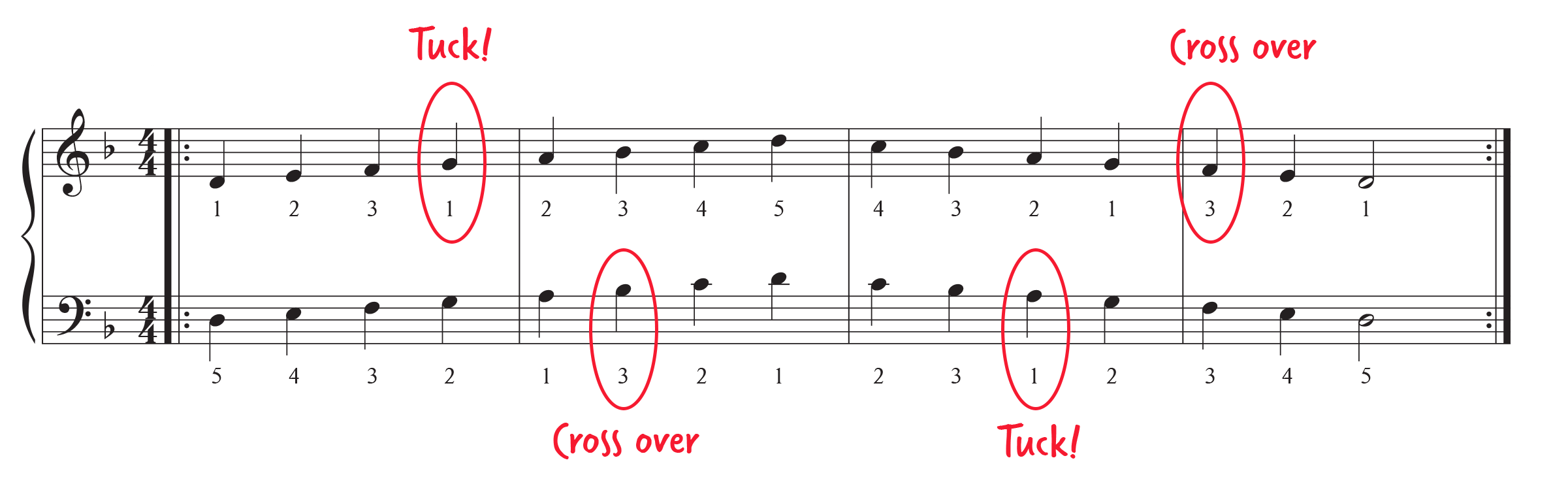
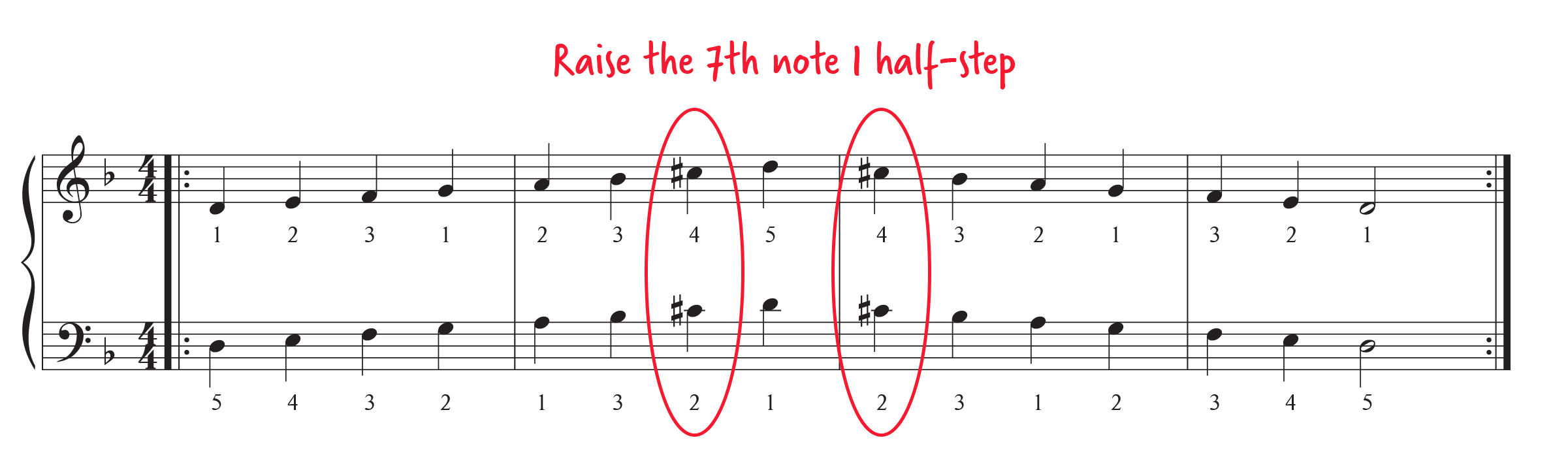
If the D Minor natural scale sounds a little funny, you’re not alone. One way to make a minor scale “resolve” nicer is by raising the seventh note. In our case, we’ll add a sharp to C.
Eventually, playing scales up and down will feel easy. And you might feel tempted to zone out… 😴
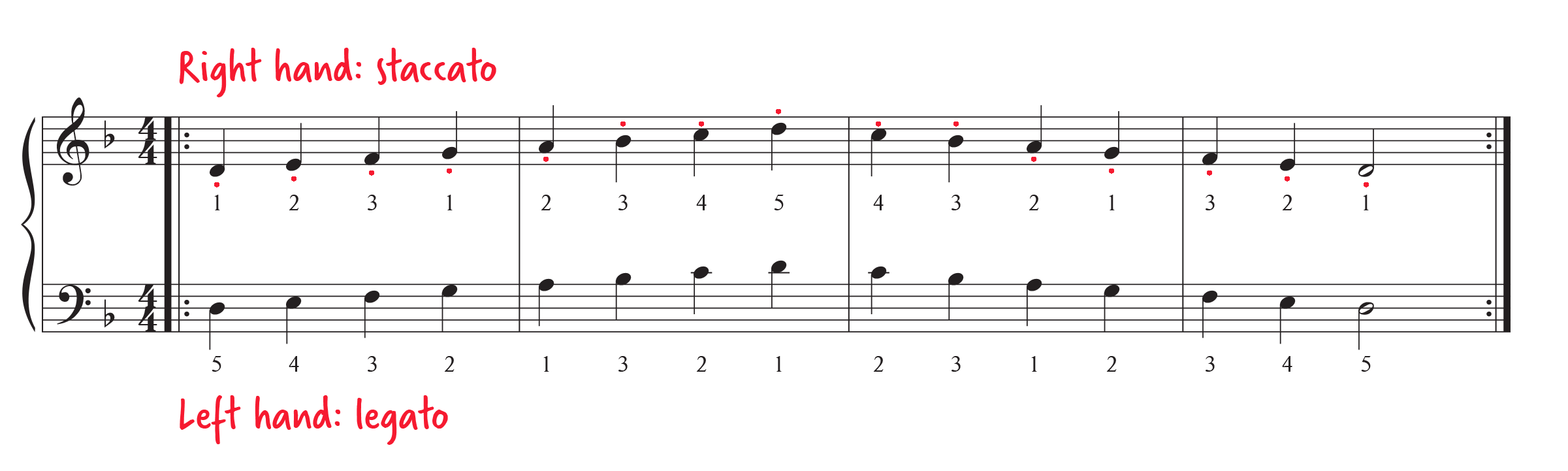
Time to refocus! Try playing the scale with a specific articulation in your right hand. Then do the same with your left. You can try staccato practice on one hand while the other plays legato. Like this:
Subscribe to The Note for exclusive interviews, fascinating articles, and inspiring lessons delivered straight to your inbox. Unsubscribe at any time.
Next, it’s time for chord practice. You may have heard of the legendary four chords that unlock hundreds of pop songs. The original Fantastic Four are C, G, F, and Am. They all belong in C Major as the I, V, IV, and vi diatonic chords, respectively.
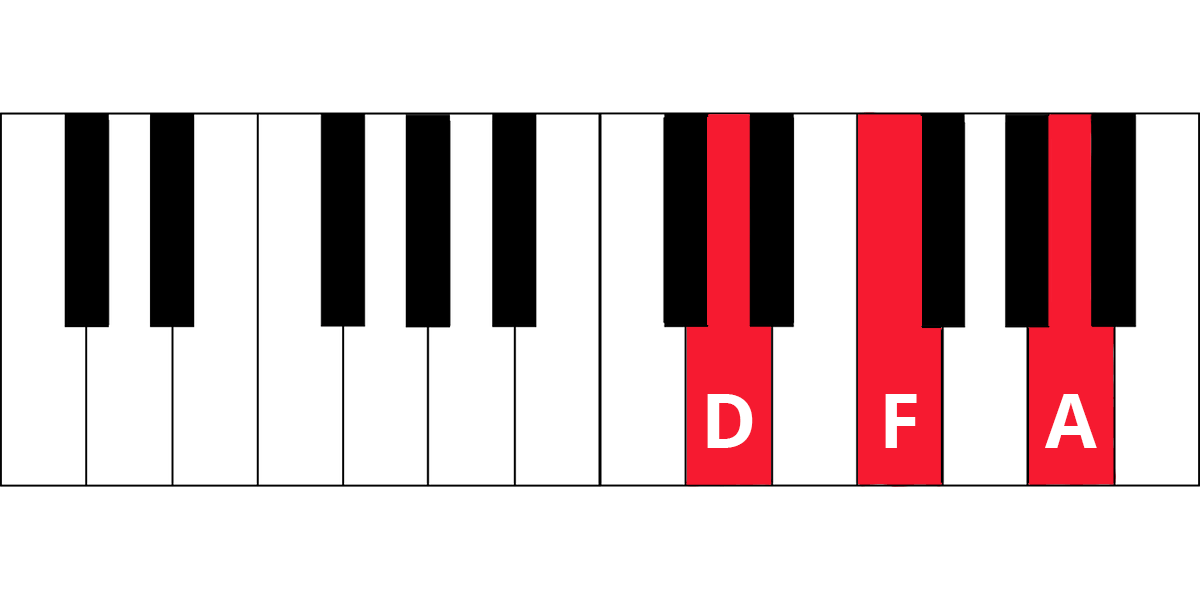
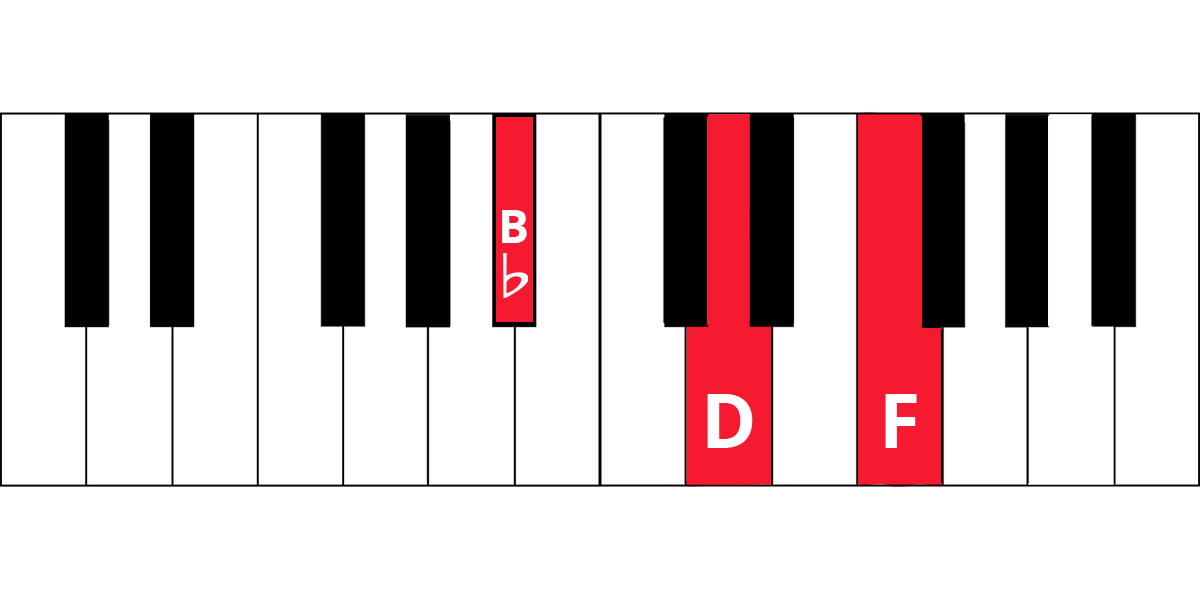
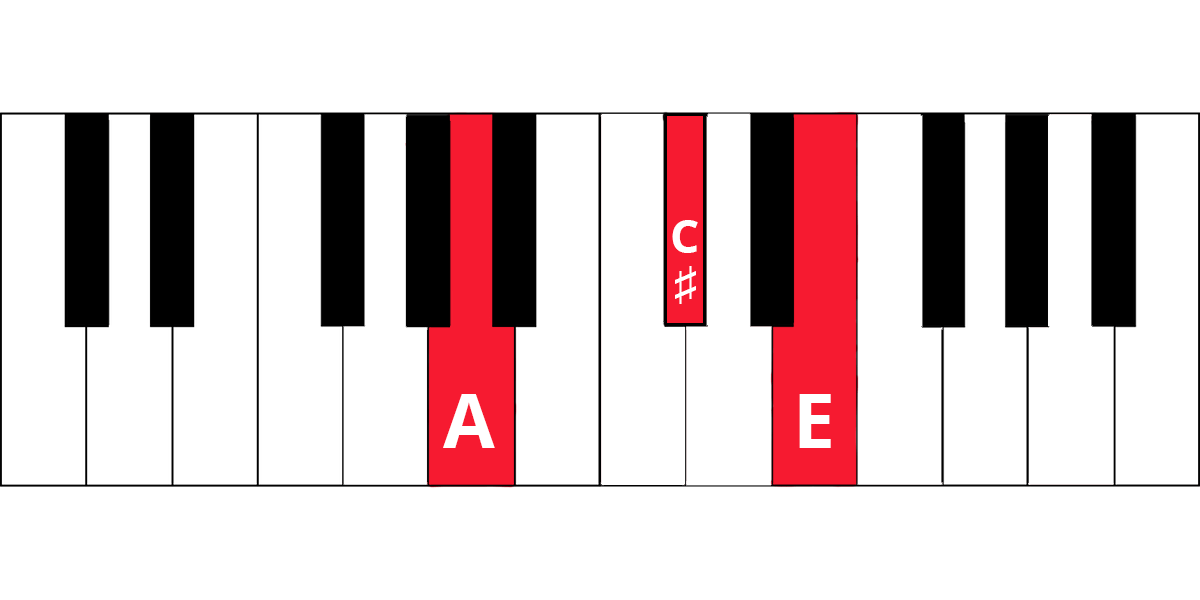
But there’s a version of these four chords in all keys. In D Minor, your magical four chords are Dm, B♭, Gm, and A.
Dm (i)
Gm (iv)
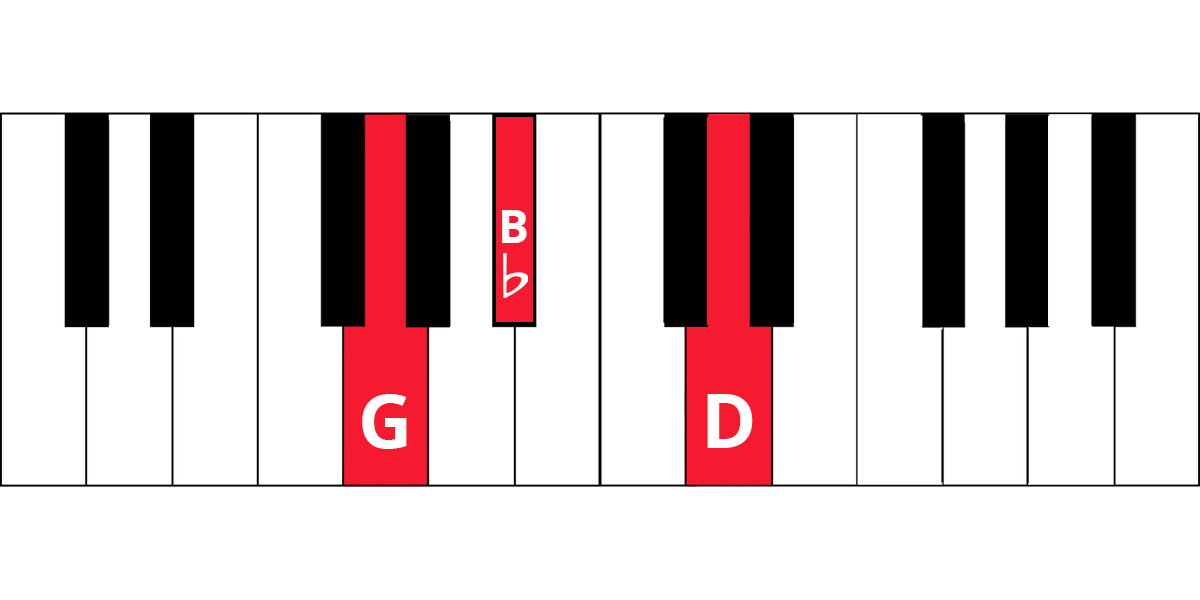
B♭ (VI)
A (V)
Let’s start with something simple. Play the Fantastic Four with your right hand and a simple fifth outlining the chord with your left.
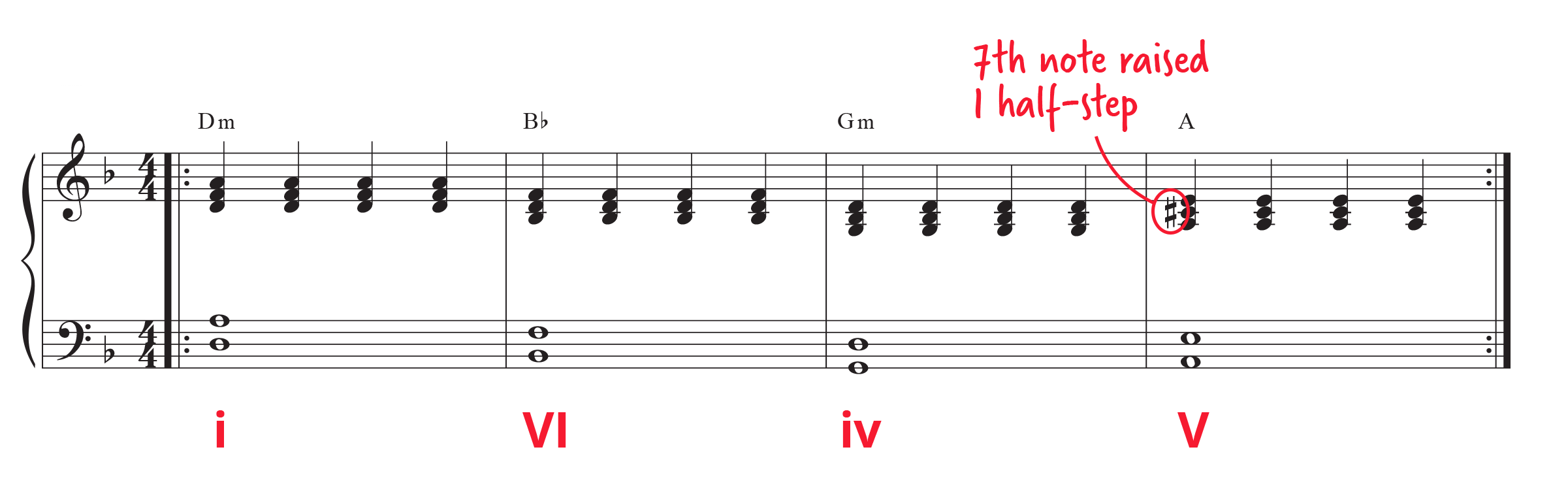
Once that feels good, try playing the chords in both hands.
If you’ve been playing piano for a while, you know just how useful inversions can be.
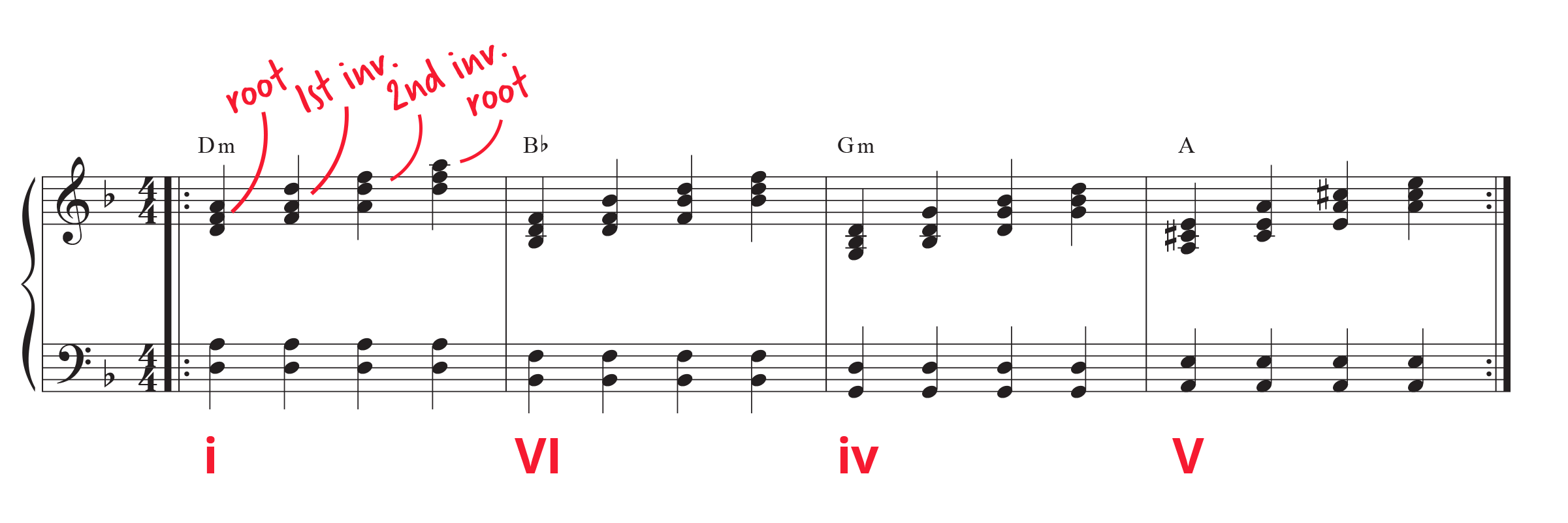
Inversions are when you play the notes of a triad in a different order. Knowing inversion shapes can help you quickly transition from chord to chord. It’s a useful shortcut.
Traditionally, students learned inversions by playing them over and over. This can sound bland, so we encourage you to practice them as part of a chord progression. Like this:
Everyone loves arpeggios. They look impressive and sound beautiful…but minor arpeggios? Minor arpeggios are on another level!
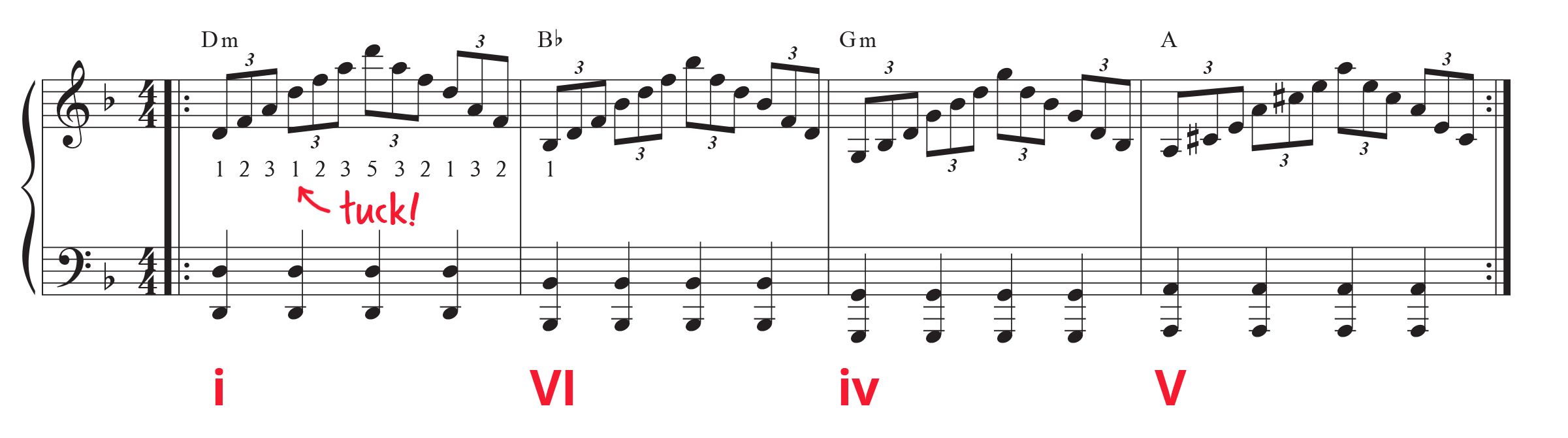
Again, you can make your arpeggio practice more songlike by playing them as part of a chord progression.
Now that you’ve gotten your scales, chords, and arpeggios out of the way, it’s time for a creative treat!
Keep that progression going on in your left hand—we suggest rocking fifths as an easy rhythm to start with. Then…just play whatever you want with your right hand.
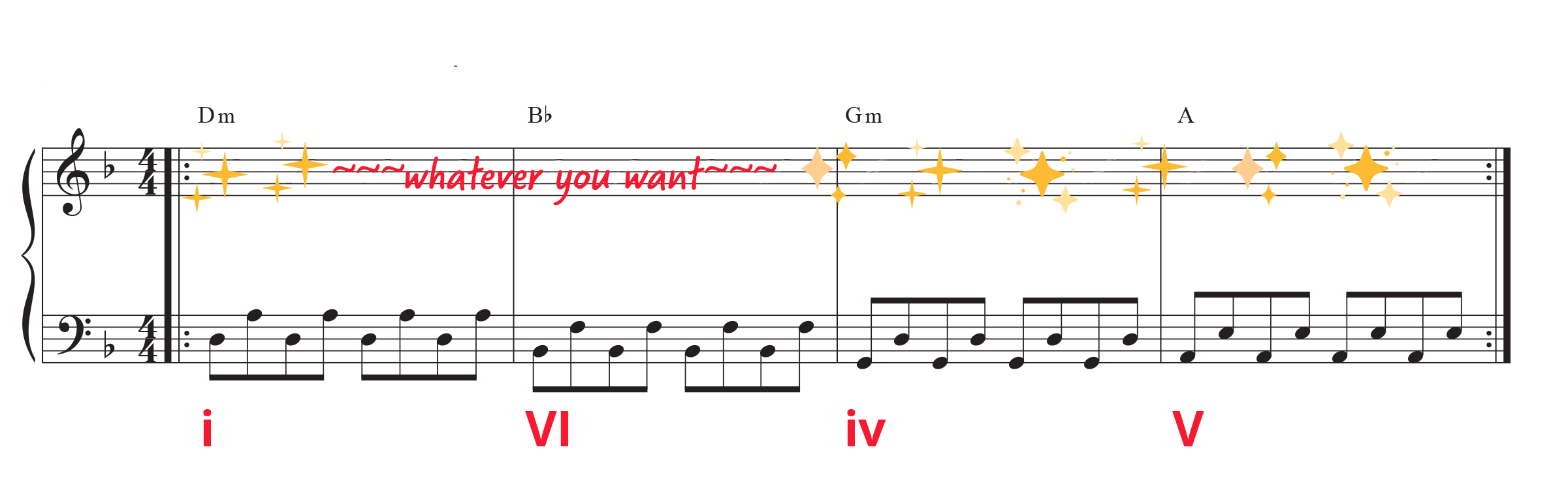
Keep to notes found within D Minor and you’ll sound good. Drop a C# here and there too.
Scales and chords are great and useful, but the point of playing piano is to play songs. And since we’re in such a D Minor-y mood, let’s play a piece in D Minor.
This is Bach’s Concerto No. 3 (BMV 974) in D Minor. It was originally an oboe concerto by Alessandro Marcello, but Bach arranged it for keyboard. It’s often called the Adagio in D Minor. If you want to learn more about this piece, here’s a short and delightful documentary by the Netherlands Bach Society.
Meanwhile, here are some tips for sight-reading a piece like this:

We hope you enjoyed this practice routine in D Minor! Getting better at piano is all about practice. But we get it: practice can get boring. So, we’re all about finding practice routines that mix technical skill-building and song-like fun. Here are more Pianote practice routines to keep you progressing instead of falling asleep:
As a Pianote Member, you’ll get access to our 10-step Method, song library, and growing community of piano players just like you. Plus: get coached by world-class pianists and learn whenever you want, wherever you want, and whatever you want.
TRY PIANOTE FOR 7 DAYS
Lisa Witt has been teaching piano for more than 20 years and in that time has helped hundreds of students learn to play the songs they love. Lisa received classical piano training through the Royal Conservatory of Music, but she has since embraced popular music and playing by ear in order to accompany herself and others. Learn more about Lisa.

Enter your email address to get your FREE E-Book instantly.
By signing up you'll also receive our ongoing free lessons and special offers. Don't worry, we value your privacy and you can unsubscribe at any time.
We’re giving away 10 (TEN) 88-key digital pianos. The Pianote Prima is the perfect beginner piano. And one could be yours.
The winner will be chosen November 21st.
So enter today!
/marketing/pianote/promos/october/biggest-giveaway/header-image-2.webp)