Have you ever walked into a lounge or cocktail bar and thought: “Wow… I wish I could play like that”?
That smooth, sophisticated piano style that feels effortless—like musical velvet?
Good news: You can absolutely learn how to play cocktail-style piano. And in this guide, we’ll show you the exact jazz techniques to get started, even if you’re new to this sound.
We’ll break down:
Let’s get into it.
 Download Your Cocktail Sheet Music
Grab the sheet music for all the exercises in the lesson and practice at home.
We’ll also send you free lessons and special offers. Don’t worry, we value your privacy and you can unsubscribe at any time.
At the heart of cocktail piano is a signature progression known as the turnaround.
This is a staple in jazz and cocktail piano.
In C major, it looks like this:
Feel free to swap diatonic chords for dominant chords (e.g., turning A minor into A7). This adds flavor and tension that jazz is known for.
Try this rhythm: One-two-three-four (Cmaj7), then move through each chord with the same pulse.
The second essential progression is the 2-5-1 (ii-V-I). It’s the foundation of jazz harmony and appears in nearly every cocktail tune.
In C major:
You can also chain 2-5s back-to-back (aka “cycling 2-5s”) to create more harmonic motion. Try:
💡 Pro tip: Practice these in different keys to build fluency.
Before we get jazzy, let’s ground ourselves with a simple technique: playing the root and fifth in the left hand.
If you’re playing Cmaj7, your left hand should hit:
This helps set a strong foundation for both stride piano and walking bass lines.
Practice this exercise:
This one simple step can make your playing sound much more polished
Stride piano = that classic jumping left hand sound.
It looks like this:
Start by breaking each chord apart:
You’ll go from playing like a beginner to sounding like a cocktail pianist in no time.
Once you’re confident, level up your stride by playing:
Now let’s swing!
A walking bass line adds forward motion and groove. You only need 4 notes:
For Cmaj7, your walking bass could be:
Repeat the same shape starting from A, D, or G for the rest of the progression.
📌 Tip: Stick to the lower half of the piano for a more authentic bass sound. It’s okay if it sounds a little crunchy—it adds character!
Want to sound less like a student and more like a pro?
Add chord extensions.
For example:
You don’t even have to play every note. Try rootless voicings in your right hand and let the left handle the root and fifth.
Example:
This sounds lush, jazzy, and sophisticated with minimal effort.
Improvisation is a huge part of cocktail piano. But it doesn’t have to be scary.
Try this hybrid scale:
You get that jazzy-bluesy flavor that’s perfect for lounge-style soloing.
Use triplet rhythms in your right hand while comping the chords in your left:
You can also mix this with your C major scale for a sweet and salty blend.
Cocktail piano might sound complex, but it’s all about small building blocks:
Keep practicing, have fun, and pour yourself a drink while you play—because that’s the spirit of cocktail piano.
If you’re loving this cocktail jazz vibe, you’re going to love the 30-Day Jazz Piano Course on Pianote.
In just one month, you’ll go from basic chords to confident, creative jazz playing—complete with:
Try Pianote free for 7 days and start your cocktail piano journey today.
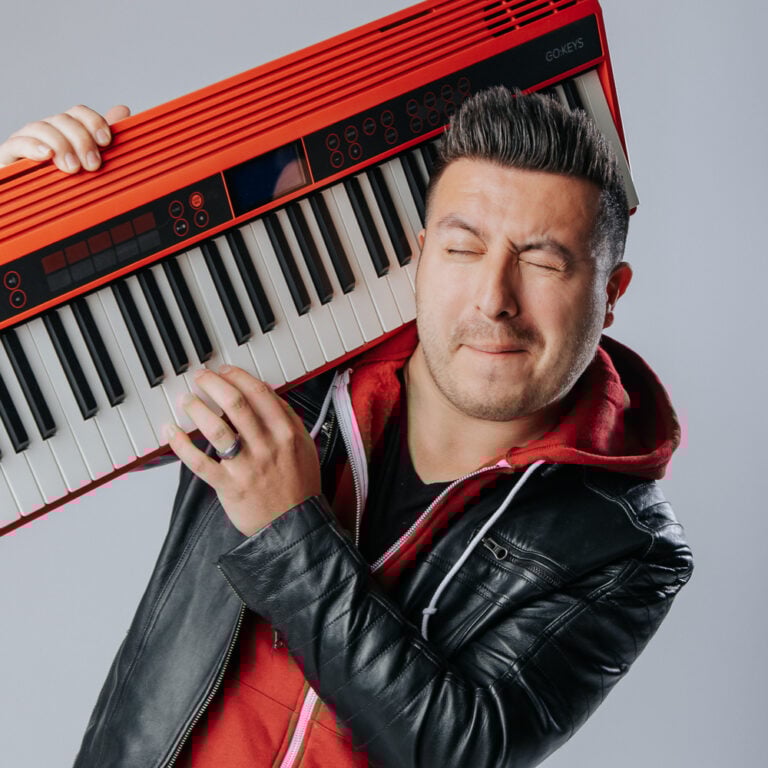
Kevin Castro is a graduate of the prestigious MacEwan University with a degree in Jazz and Contemporary Popular Music, and is the Musical Director and touring pianist for JUNO-winning Canadian pop star, JESSIA. As your instructor at Pianote, Kevin is able to break down seemingly complex and intimidating musical concepts into understandable and approachable skills that you can not only learn, but start applying in your own playing. Learn more about Kevin here.
/marketing/pianote/lead-gen/getting-started/coach.webp)
/marketing/pianote/lead-gen/getting-started/logo.webp)
By signing up you’ll also receive our ongoing free lessons and special offers. Don’t worry, we value your privacy and you can unsubscribe at any time.
We’re giving away 10 (TEN) 88-key digital pianos. The Pianote Prima is the perfect beginner piano. And one could be yours.
The winner will be chosen November 21st.
So enter today!
/marketing/pianote/promos/october/biggest-giveaway/header-image-2.webp)